
Mapacho
Nicotina rustica

Everywhere it is traditionally grown, tobacco has been, and still is, a primordial medicinal plant.
There are many different types of tobacco. Nicotiana tabacum comes from North and Central America. It has been used for ceremonial purposes for more than 12,000 years. Nowadays, it is the most common one and is grown all around the world for industrial tobacco production.
Mapacho refers to Nicotiana rustica, the wild tobacco of the jungle that grows in South America. Like its smaller northern relative,
Mapacho holds a central place in traditional medicine and ceremonial practices, but with stronger energetic and curative properties. It contains up to 20 times more nicotine than regular tobacco, and its taste is much stronger, richer, and more complex.
The quality and aroma of Mapacho depend on the terroir, and like wine, each country and region has its own specific tobacco. Peruvian Mapacho lovers often say that the one from Pucallpa is the best.
It can be used in many forms: as dried fermented leaves (smoked), as a powder called rapé (snuffed), as a concentrated paste called ampiri or ambil (ingested), as a juice (used to cleanse the nasal passages), or as a tea.
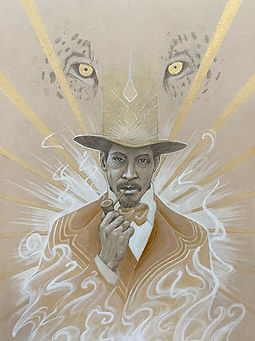

Mapacho is one of the most important plants in traditional medicine and is often referred to as the “father of all plants.” Why does it hold such a predominant place?
First of all, Mapacho is considered an energetic food for plants and trees, as well as a catalyst for their medicine. Offering Mapacho is seen as a valuable gift to the plant world. For those who learn from plants, Mapacho strengthens the connection and nourishes the plant within the body. During processes of healing and learning, smoking tobacco or ingesting ampiri is highly recommended.
In both healing processes and ceremonies, Mapacho is also used for its cleansing and protective properties.
The strong smell of its smoke is highly effective in removing, clearing, and protecting people and spaces from all types of undesirable energies and spirits.
Mapacho also has a powerful ability to bring mental clarity, focus, and strength to both mind and body, making it a valuable tool in ceremonies as well as in daily life.
In many traditions, tobacco and Mapacho are used to hold prayers. Icaros (medicinal songs) can be stored in Mapacho and carried through the smoke. Curanderos blow the smoke onto the patient—a practice called soplada—transmitting both the medicine of the Mapacho and the energy of the Icaros.
Mapacho can also be used as a strong purgative plant. A tea made from its leaves must be consumed in precise quantities, as its high nicotine content makes it potentially dangerous.

It’s remove negative energies and spirits, and induce a deep, dream-like sleep that helps release fatigue.
Mapacho carries a strong masculine energy and enhances these qualities in those who work with it. The spirit of Mapacho appear as black man wearing a hat, appearing in a visionary world of brown, gold, and white.
Both Mapacho and tobacco carry great medicine, but also a darker side. If not used with the right intention, they can bring obscurity, addictive behaviors, and emotional disconnection.